10 Facts You May Not Know About British Wool
How much do you know about the wool industry and British wool? We bring you 10 amazing facts so you can find out more about this unique fibre.
The UK has more than 72 breeds of sheep* and produces around 23 million kilograms of wool a year**. For decades farmers were paid so little for their fleeces that shearing often cost more than the wool was worth, but prices are finally rising, and British Wool prices averaged £1.70 per kg*** at the start of 2026, the highest in ten years. Here are ten facts about where British wool comes from, what it’s used for and who buys it.
Every October is Wool Month, when British Wool and the brands, mills and retailers who work with it spend the month reminding the rest of us why wool matters. It felt like a good time to update this article, which I first wrote back in 2022, because quite a lot has changed since then, and most of it for the better.
* 72 breeds of sheep is the figure quoted by the Great British Wool Revival in 2026
**Amount of wool produced is from British Wool’s ‘Wool in Numbers
*** Price of wool according to British Wool September 2026
Dispelling the Myth That British Wool is Only Suitable for Carpets
There’s a long-standing belief that British wool is too coarse for anything other than carpets and rugs, and it’s one I still hear from brands who assume they’ll have to use merino from Australia if they want something soft against the skin.
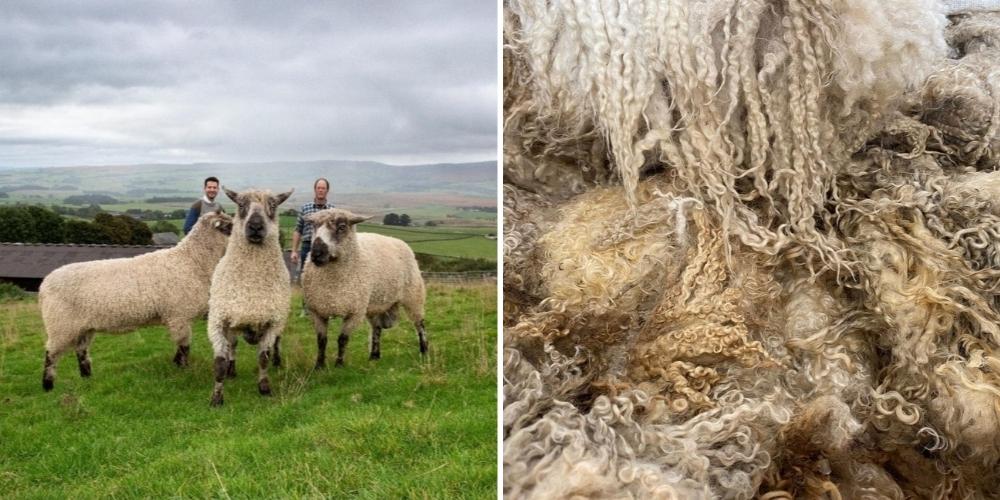
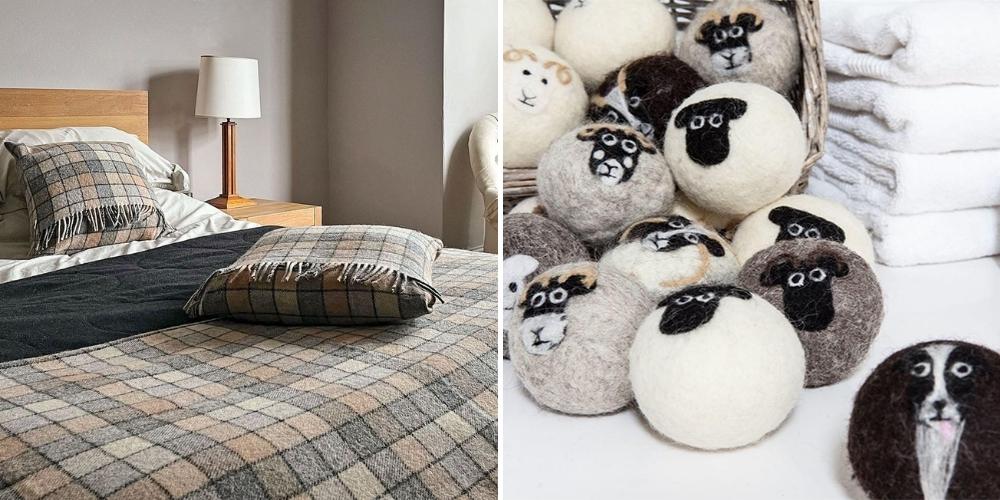
The reality is that it depends on the breed of sheep and where it’s raised. Hill breeds from the north of England, Wales and Scotland grow tougher, coarser fleeces because that’s what they need to cope with the weather up there, and their wool is perfect for tweeds, outerwear and upholstery.
Lowland breeds have softer fleeces, and Bluefaced Leicester produces some of the finest wool grown anywhere in the UK, which is why you’ll see it named on so many British knitwear labels.
British Wool is keen to dispel the myth that the fleece from our homegrown sheep breeds is unsuitable for anything other than carpets. In fact, it’s all a bit more complicated than that.
Weather and the geographical location of the flock heavily influence the quality of the wool in terms of its micron. For instance, if you are a Welsh mountain sheep, your fleece will be stronger and more robust as it has responded to the harsh Welsh weather, whereas sheep in the lowlands don’t need quite such strong fleece, so it is usually softer and finer.
10 Facts About British Wool
- The UK produces around 23 million kilograms of wool a year, with each sheep growing 2 to 3 kilograms of fleece annually.
- Demand for British wool is on the rise. Farmers were paid an average of £1.70 per kilo in the first four auctions of 2026, up from 70p the year before and the best price in a decade.
- At the expected 2026 return of around £1 a kilo, an average 2.5kg fleece is worth about £2.50 to the farmer, according to Farmers Weekly.
- Around 30,000 sheep farmers sell their wool through British Wool, the farmer-owned organisation that collects, grades and sells the national clip.
- There were 30.48 million sheep in the UK in June 2025, although the national flock has been getting smaller for several years.
- Britain has more than 72 breeds of sheep, more than any other country in the world.
- There are only 2 commercial wool scourers left in Britain, both of them in Yorkshire. Scouring is the washing of raw fleece before it can be spun.
- There are at least nine processes in the wool supply chain to turn a fleece into clothing: shearing, grading, scouring, carding, combing, spinning, weaving/knitting, dyeing and finishing.
- Wool can absorb around 30% of its own weight in moisture without feeling wet, and it biodegrades in soil in less than a year without shedding microplastics. That makes it a super fibre!
- A growing number of UK brands can now trace a garment back to the farm its wool came from. Glencroft’s Clapdale wool comes from farms within ten miles of its home in the Yorkshire Dales, and Katie Cotmarsh knits with wool from her own flock in Wiltshire. You’ll find more brands like these in our guide to the Best of British Wool Clothing & Accessories.
Who Buys British Wool?
Once it’s sheared, British wool is collected by British Wool, graded by hand into different types according to things like fineness, length and colour, and then sold at auction to merchants. A large share is exported, with China among the biggest buyers, and some of it comes back to the UK as finished products. That means a jumper labelled “British wool” may well have travelled to the other side of the world and back before it reaches you.
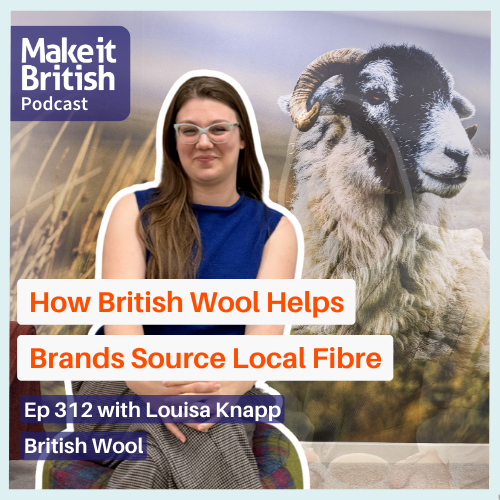
That’s why the brands that keep the whole process in the UK are worth seeking out. I talked about this, and a lot more about how the wool industry works, with Louisa Knapp from British Wool on the Make it British Podcast.
My visit to British wool in Bradford
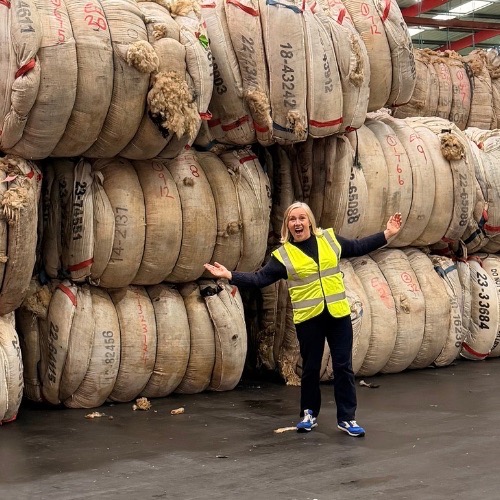
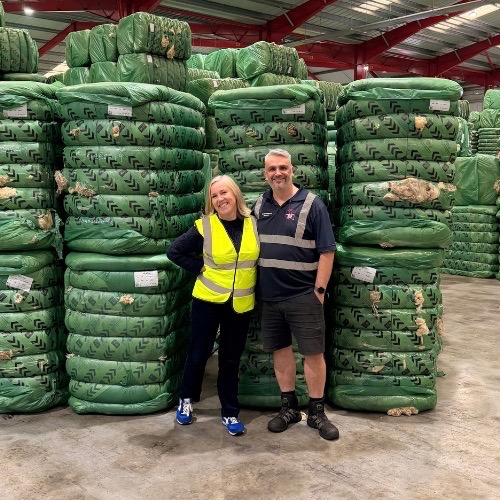
At British Wool in Bradford they classify fleeces into 120 different grades of wool by hand. Top grader, Ian, showed me how they classify the different fleeces just by feeling them, and introduced me to his 18 year old son, who is now training to be a grader too.
Want to Buy British Wool Clothing?
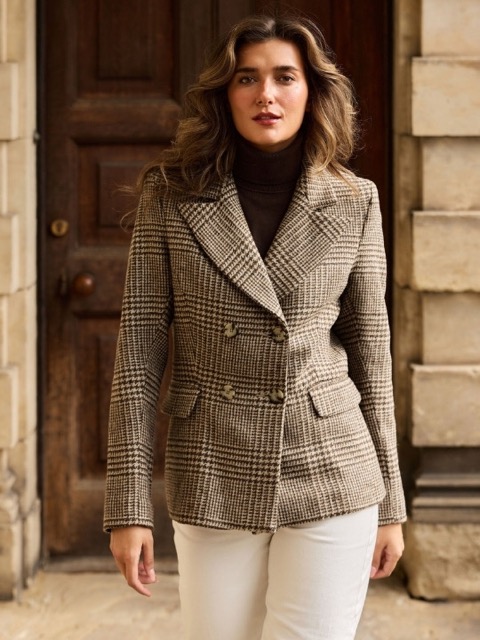
Check out our guide to the Best of British Wool Clothing & Accessories which lists many of the brands that are using British wool and manufacturing their products in the UK.
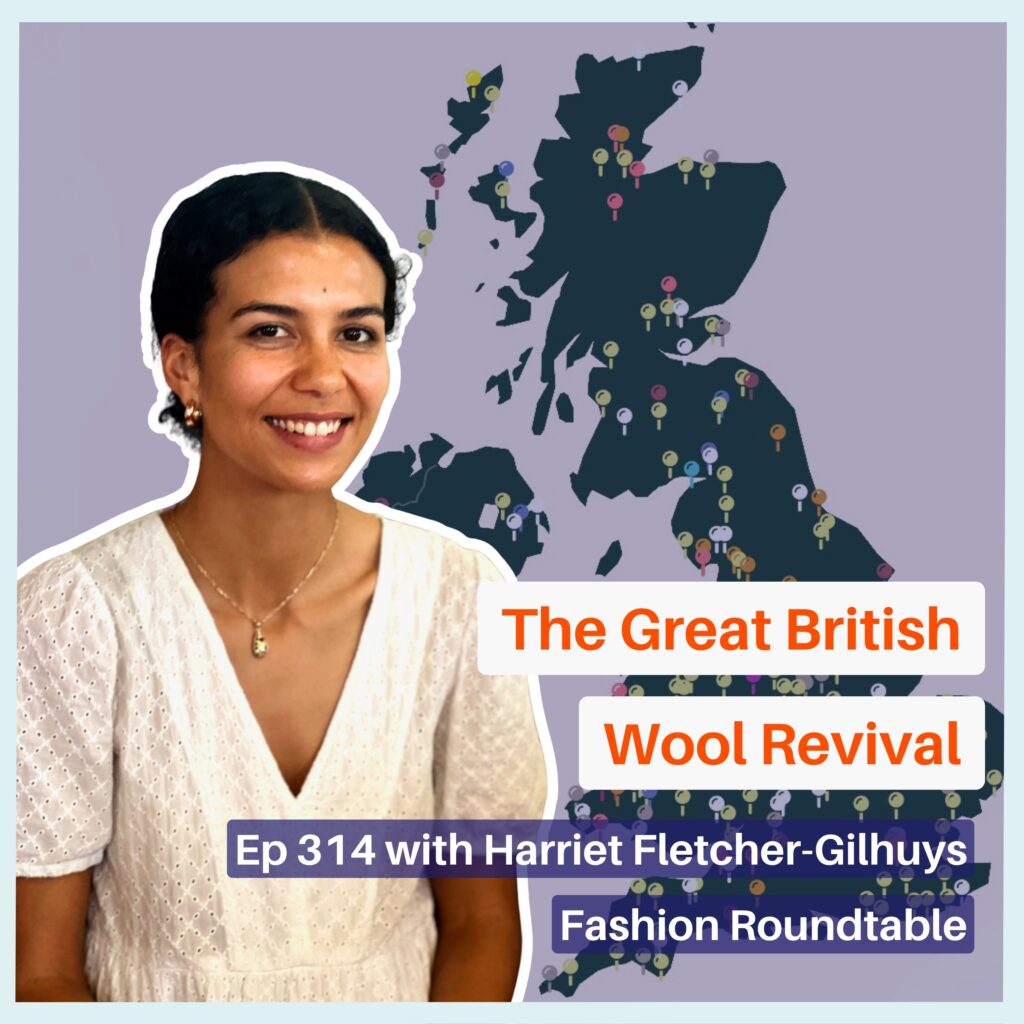
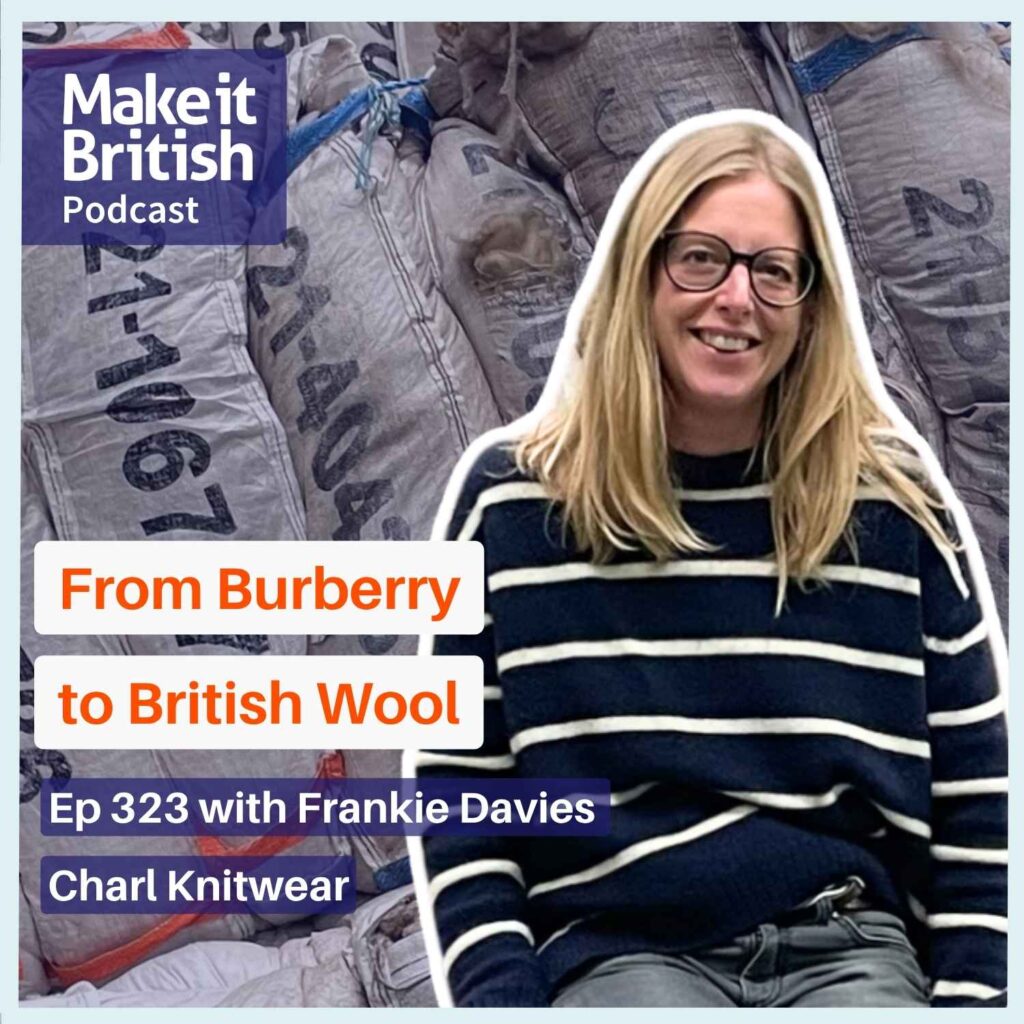
Women in Wool on the Make it British Podcast
The Make it British Podcast featured a series of interviews with women working in the British wool industry. From designers, weavers, spinners, to all-round champions of British Wool.

Frequently Asked Questions about British wool
It depends on how you classify ‘itchy’. To some extent it depends on the breed, because finer fibres, such as Bluefaced Leicester, feel softer against the skin, while hill breeds are better suited to tweeds, outerwear and carpets. And some people with sensitive skin will find all types of British wool itchy – poor them!
British Wool is currently selling wool at an average of £1.70 per kilo at auction, but after collection and grading costs farmers were paid an average of 68p per kilo for the 2025 clip. Returns for 2026 are expected to reach around £1 per kilo, which is about £2.50 for a typical 2.5kg fleece. Prices are on the rise thanks to the amazing work that British Wool is doing to promote the benefits of this wonderful natural fibre.
Wool is renewable, grows back every year and biodegrades in soil in less than a year without shedding microplastics. Buying British also cuts the distance it travels, especially from brands that spin, knit or weave it in the UK. Furthermore, the UK does not shear sheep using mulesing methods, and high animal welfare standards in the UK far exceed those in other countries.
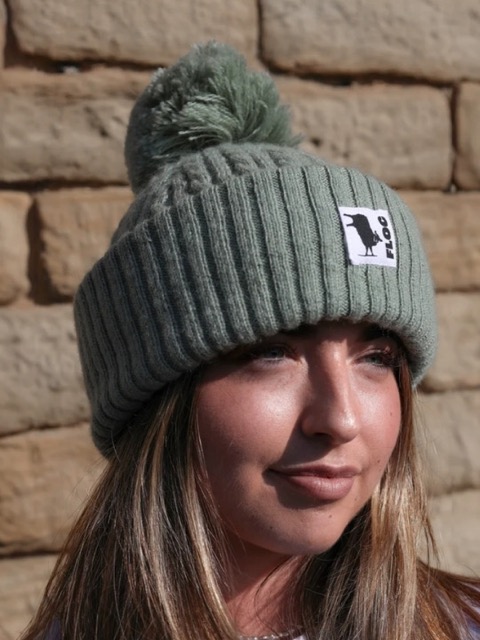
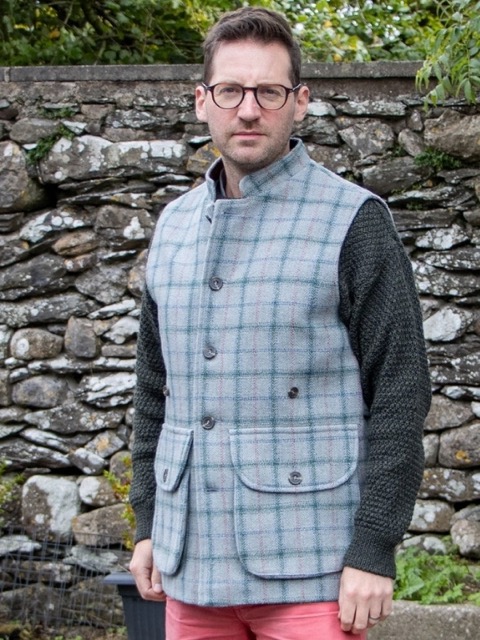
Our guide to the Best of British Wool Clothing & Accessories lists UK brands making jumpers, cardigans, coats, gilets, hats and gloves from British wool, all made in the UK.
If you want to find out more about British yarn, you may be interested in this article on the Best of British Yarn Producers and the Best of British-Made Knitwear Brands